Cat Peeking Line Art: A Designer’s Real-World Embroidery Review
First Impressions: Simple, Playful, and Surprisingly Versatile
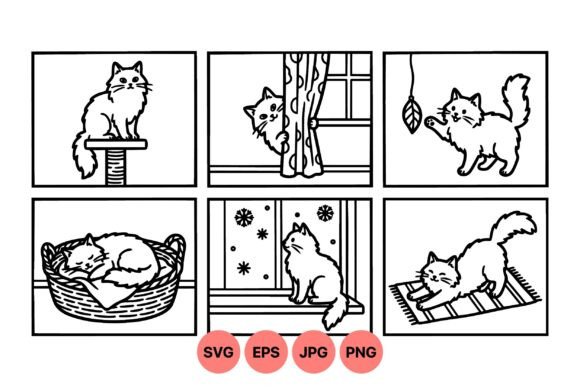
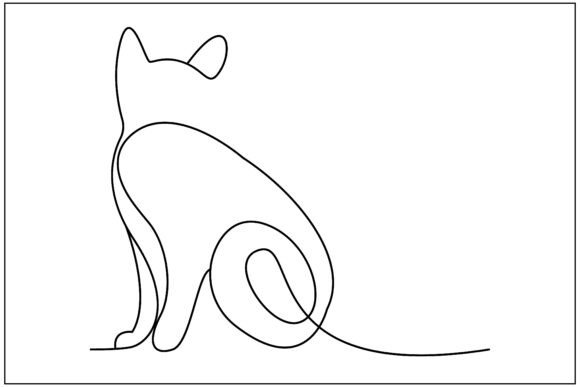
When I opened the Cat Peeking Line Art file, I didn’t see clutter—I saw quiet confidence. It’s a single-line illustration: no shading, no gradients, just one continuous, fluid contour of a curious cat peering around a corner or edge. The curve of its ear, the tilt of its head, the subtle bend in its front paw—it all breathes personality without overcomplicating the shape. As an embroidery designer who tests dozens of graphics weekly, I immediately thought: This could work beautifully on a linen tea towel for a boutique kitchen line—or stitched small on a baby onesie as a gentle, gender-neutral detail.
Why It Fits So Well in Real Embroidery Projects
I recently used Cat Peeking Line Art to develop a limited-run embroidered tote bag collection for a local gift shop. We chose natural canvas with off-white thread—no fill stitches, just a clean running stitch following the original line. The result? Crisp, modern, and unmistakably handmade. Customers responded to how light and expressive it felt—not “cute” in a cloying way, but quietly observant, like the cat itself.
That same line translated well across other real-world applications:
- Tote bags & aprons: Holds up at 3.5–4 inches wide—ideal for side panels or lower corners where stitching stays visible but doesn’t dominate.
- Baby items & nursery decor: Minimal line weight means no risk of stiff, bulky stitching on delicate cotton or interlock knit.
- Patches & caps: When digitized carefully (more on that below), it reads clearly even at 2.75 inches—no lost details in the curve of the tail or eye.
- Holiday or wedding gifts: Paired with monogram initials or a subtle date, it adds warmth without theme overload—think “first Christmas” pillow cover or “Mr. & Mrs.” kitchen towel.
Where Caution Is Needed—Not Flaws, Just Realities
Line art is elegant—but not universally forgiving in embroidery. Here’s what I watched for during testing:
- Small hoop sizes (under 4"): The full composition fits, but tight curves (like the inner ear) need careful digitizing—some auto-digitizers flatten them into awkward angles. Always inspect the vector path before converting to an embroidery file.
- Stretchy or thin fabrics (rib knits, lightweight rayon): That delicate line can waver or pucker without proper cutaway stabilizer underneath. I used a medium-weight tear-away + light cutaway combo on a sweatshirt test—and it held perfectly.
- Dark or textured fabrics: On charcoal terry cloth towels, the line vanished unless I switched to ecru or pale gray thread. Not a design flaw—just a reminder to test contrast early.
- Curved surfaces (caps, curved pillow edges): The line’s simplicity helps, but avoid placing the “peeking” point directly over a seam or crown curve—it can distort the illusion. Center it on flat zones instead.
What This Design Does for Your Craft Business—Beyond Aesthetics
As an Etsy seller and small shop product developer, I look beyond “does it stitch?” I ask: Does it elevate perceived value? Does it feel intentional, not generic? With Cat Peeking Line Art, yes—consistently. Its restraint makes finished products feel curated, not mass-produced. A customer buying a custom embroidered sweatshirt with this design isn’t just getting apparel—they’re getting a quiet moment of charm. That builds trust. That encourages repeat orders. That turns a $28 tote into a keepsake.
It also scales gracefully across your brand: use it solo on a patch, pair it with hand-lettered text for a printable mockup, or layer it subtly behind a logo in a boutique’s packaging suite. Because it’s categorized under Illustrations and delivered as clean Graphics, it integrates easily into broader design assets—no fighting clipping masks or raster noise.
Practical Notes Every Embroidery Designer Should Check
Before committing to production—whether for client work, your own craft business, or digital resale—here’s my checklist, refined from actual Cat Peeking Line Art testing:
- Test on scrap fabric first, especially if using textured weaves or blends—the line’s flow changes subtly depending on how the needle interacts with the grain.
- Review thread color contrast on both light and dark backgrounds. What reads softly on ivory may disappear on navy.
- Confirm stitch density—a true line art digitization should run at low density (under 10k stitches). If your file feels heavy or dense, re-digitize from the original vector.
- Check hoop size compatibility for your most-used machines. While the graphic is scalable, extreme shrinking risks losing the cat’s expressive tilt.
- Inspect tiny details in the vector: the tip of the nose, the break between ear and head—these define the “peeking” illusion. If they’re pixelated or jagged, go back to the source file.
- Use black-and-white mockups to assess clarity before stitching—this reveals weak contrast or ambiguous spacing faster than color ever will.
- Verify licensing terms before selling finished items or bundling Cat Peeking Line Art into digital embroidery kits. Since the description says “you can use this… for many creative products,” commercial use appears permitted—but always confirm scope (e.g., unlimited small-batch sales vs. resale of the file itself).
A Final Thought: Less Is Truly More Here
In a market flooded with ornate, over-digitized cat motifs, Cat Peeking Line Art stands out by doing less—and saying more. It doesn’t shout. It invites. It leaves room for the fabric, the thread, the maker’s hand, and the buyer’s imagination. Whether you’re stitching it on a holiday tea towel for your Etsy shop or digitizing it for a local café’s staff aprons, it carries weight because it respects the craft. Not every line art graphic earns that trust. This one does.